
Performance Max Is Making Ad Decisions You Never Approved - Here's What It Actually Optimises For
Performance Max Is Making Ad Decisions You Never Approved - Here's What It Actually Optimises For
Quick Answer
Performance Max doesn't optimise for "sales" or "leads" in any human sense - it optimises for the specific conversion events and value signals you've configured. If those signals are misconfigured, such as tracking page views instead of purchases or form starts instead of qualified leads, the algorithm can efficiently pursue the wrong target, producing a dashboard that looks strong while the underlying business outcome doesn't match it. Audience signals can help the system find relevant users more quickly, but they don't strictly limit where ads can run. The real lever available to advertisers isn't manual control; it's the quality of the inputs - conversion data, creative assets, and signals - fed into a system designed to optimise toward the goals it is given.
Introduction
Ask most advertisers running Performance Max what it's actually optimising for, and the honest answer is usually, "Sales, I think" - followed by a pause.
That pause is the problem. Performance Max has become a major campaign type across Google Ads, yet many of the people investing in it couldn't precisely explain which conversion event, value signal, or audience input is influencing how their budget is optimised.
This isn't a criticism of the people running it. Performance Max is designed to work with limited visibility into many of the decisions happening behind the scenes - assets go in, automated decisions come out. This article breaks down what actually influences those decisions, what audience signals genuinely do and don't do, and where the real levers are for businesses that want to guide the system rather than simply hope it works.
Why This Matters
Performance Max is no longer a niche campaign type worth understanding eventually. By early 2026, it accounts for roughly 45% of all Google Ads conversions, and more than one million advertisers globally now run it.
Statistic Callout: Operators managing high-spend Performance Max accounts report that advertisers who understand the platform's less-obvious controls can outperform those who don't by roughly 2–3x, based on analysis from agencies running PMax across a combined base exceeding 1,000 customer accounts.
That's not a marginal skill gap. Nearly half of Google Ads outcomes now run through a system that many advertisers still treat as a black box. The difference between understanding how Performance Max responds to conversion data, creative assets, and audience signals-and simply letting it run-can therefore become a significant advantage in paid media performance.
What Performance Max Actually Is
Definition: Performance Max is a goal-based Google Ads campaign type that runs a single campaign across Google's inventory - Search, Shopping, Display, YouTube, Discover, Gmail, and Maps - using machine learning to determine placements, audiences, bids, and creative combinations automatically.
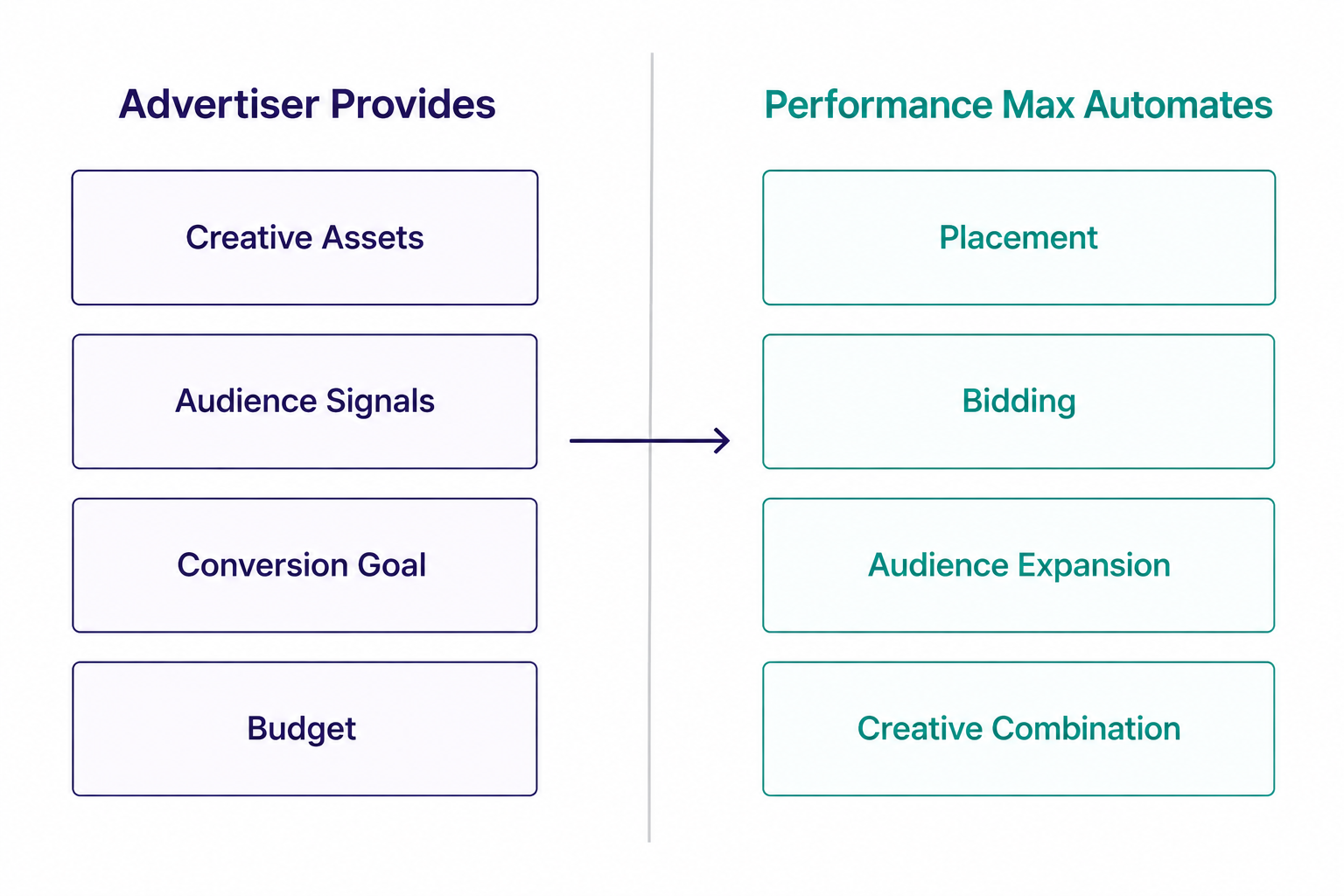
It launched in beta in late 2020, rolled out globally in 2021, and fully replaced Smart Shopping and Local campaigns by September 2022. Rather than managing separate campaigns for each channel, an advertiser provides three core inputs - creative assets, audience signals, and conversion goals - while the algorithm determines which channels, audiences, bids, and creative combinations to use from auction to auction.
What this means practically: the campaign name is accurate. It genuinely optimises for maximum performance against whatever target you've defined - and that's where the catch lies.
The Core Misunderstanding: "Optimise for Sales" Isn't What You Think
This is the single most consequential misunderstanding advertisers have about Performance Max.
The algorithm doesn't understand what a "good sale" means to your business. It understands a specific tracked conversion event and the value signal attached to it - nothing more. According to System Strats' 2026 analysis, if conversion tracking isn't properly configured to measure the actions that actually matter to the business, Performance Max may optimise toward whatever it can measure most easily. That can mean chasing low-value micro-conversions such as page views or form starts rather than the purchases or qualified leads the business actually wants.
Expert Insight Callout: One operator guide from Kick Ads puts it plainly: Performance Max "will faithfully optimise the goal you give it - including, without you noticing, claiming credit wherever it's easiest." Another analysis from Fiveninestrategy frames the same issue differently: "Performance Max isn't broken - it optimises exactly for the signals you feed it." Both describe the same underlying mechanism: the algorithm isn't guessing at your business intent. It's executing the tracking setup and signals you've provided - flaws included.
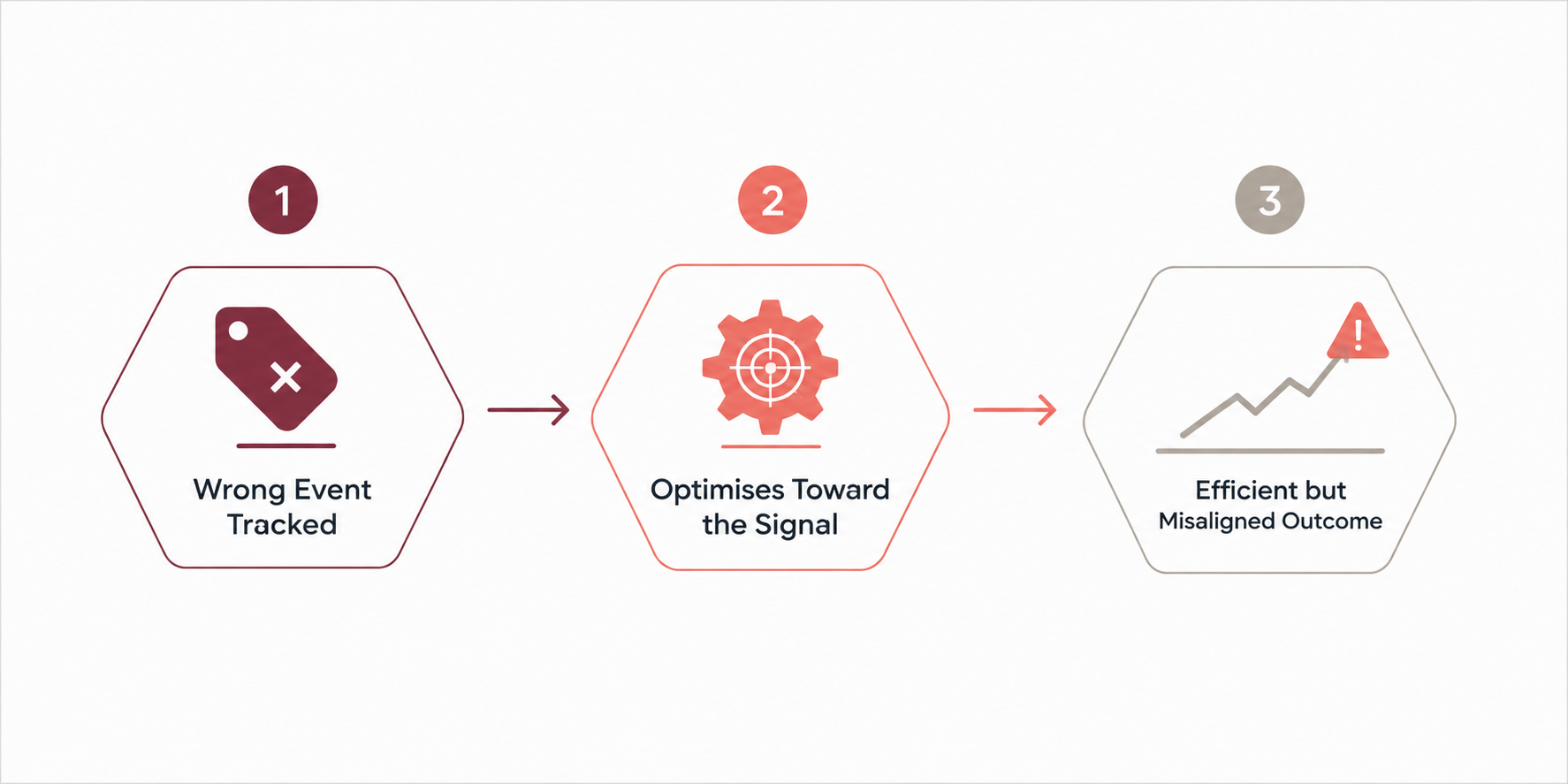
What this means practically: The most consequential decision in a Performance Max account isn't a creative choice or a budget number - it's whether the conversion event being optimised toward actually represents meaningful business value.
What Audience Signals Really Do (and Don't Do)
Audience signals are the part of Performance Max most advertisers misunderstand as a targeting control. They aren't.
According to System Strats' 2026 breakdown, audience signals primarily affect the speed of optimisation rather than acting as a strict limit on where ads can ultimately be shown. Strong, precise audience signals can help the campaign identify promising users faster, potentially reducing inefficient spend during the learning phase. Weak or limited signals may give the system less useful starting information, requiring more time and conversion data to optimise effectively.
They are better understood as a starting point, not a leash. Performance Max can expand beyond the audiences you suggest when its systems identify additional users who are likely to contribute to the campaign's conversion goals.
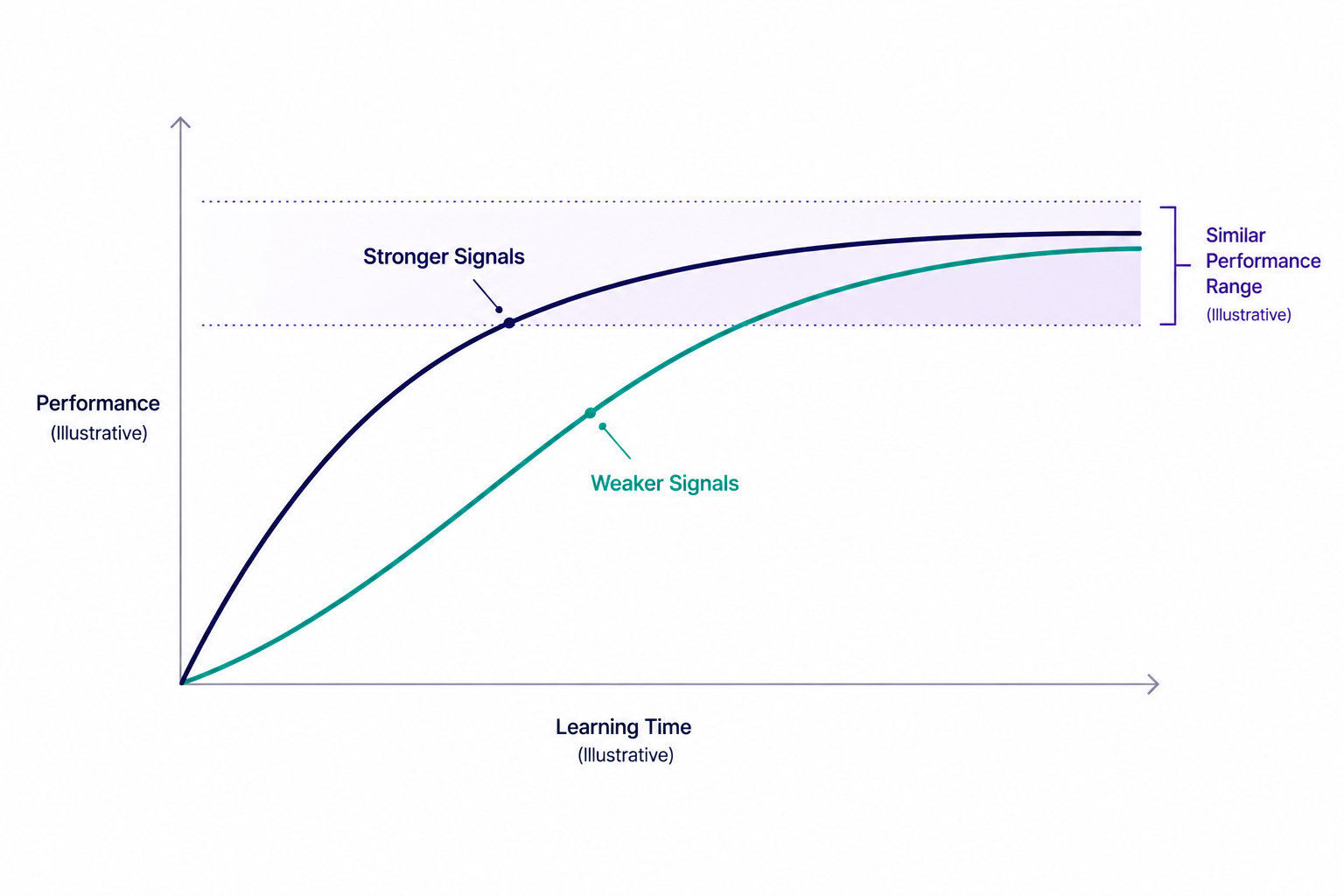
What this means practically: treating audience signals as a way to strictly restrict who sees your ads misunderstands the tool. Their real value is in giving the system a stronger starting point - while the quality of your conversion data and campaign inputs ultimately has a much bigger influence on what Performance Max optimises toward.
The Transparency Gap Has Narrowed, But Hasn't Closed
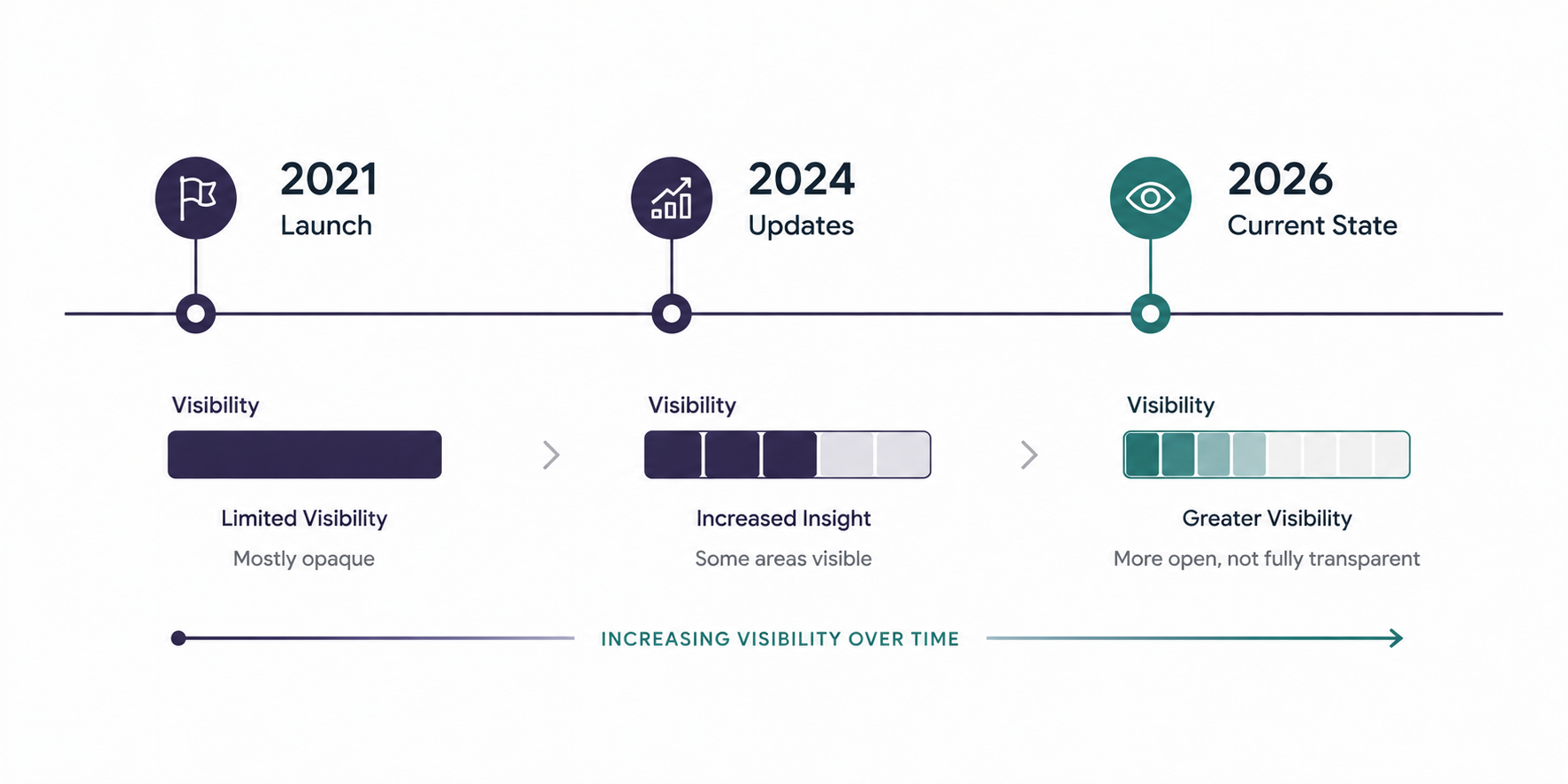
Performance Max earned its “black box” reputation honestly in its early years - advertisers put budget in, received results out, and had very little visibility into what happened in between.
That has changed meaningfully. The 2025–2026 update cycle introduced more reporting and control, including channel-level performance reporting, expanded negative keyword controls, campaign-level brand exclusions, more detailed search term insights, and Search Themes. These features give advertisers more ways to understand and influence how a Performance Max campaign operates without returning to the fully manual control available in standard Search campaigns.
What hasn't fully closed is the granularity gap. System Strats' analysis describes this as one of the platform's most legitimate criticisms: advertisers still don't receive the same term-by-term and placement-by-placement visibility available in a standard Search campaign. The black-box problem is clearly smaller in 2026, but it hasn't disappeared.
What this means practically: advertisers should actively use the visibility Google has added - including channel reporting, search term insights, and negative keyword controls - without assuming either that Performance Max remains completely opaque or that every aspect of campaign delivery is now fully visible.
What This Looks Like in Practice
An e-commerce brand. Its Performance Max dashboard shows a steadily improving conversion rate over three months - but revenue hasn't moved. The conversion event being tracked is “add to cart,” not “completed purchase.” The algorithm does exactly what it was told: it becomes very good at generating add-to-carts. Correcting the optimisation signal to actual purchase completion, then giving the campaign time to learn against that corrected signal, is likely more important than simply creating a new campaign structure.
A B2B lead-generation business. Lead volume looks excellent, but the sales team says many of the leads are unusable. The tracked conversion is a form submission, with no distinction between a genuine qualified inquiry and a bot-filled or clearly disqualified entry. The campaign therefore optimises efficiently for form fills, but it has no reliable way to know which submissions actually matter because that information is never fed back into the conversion signal.
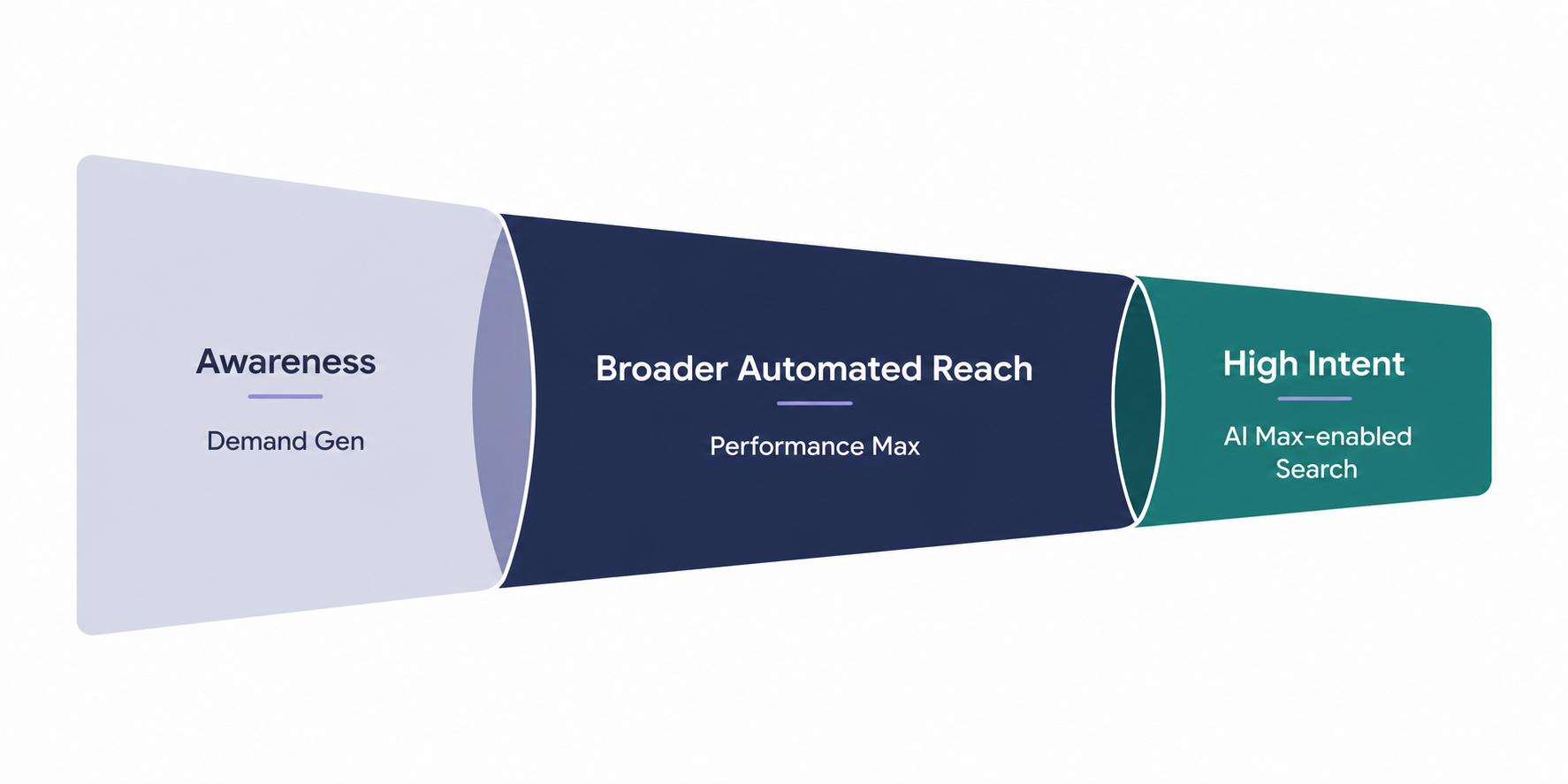
A multi-location retailer. The business uses Google's recommended “Power Pack” approach, combining Performance Max for broader automation, AI Max-enabled Search for high-intent search activity, and Demand Gen for awareness. The intended benefit is clearer campaign roles across different stages of the customer journey, helping reduce unnecessary overlap rather than having multiple campaign types competing with the same objective and audience opportunities.
The common thread: Performance Max can only optimise as intelligently as the business signals it receives. Better campaign structures and creative assets matter, but the conversion data guiding the algorithm remains one of the most important inputs.
Best Practices: What to Actually Do
Audit conversion tracking before touching anything else. Confirm that the primary conversion event represents genuine business value or revenue-not simply a proxy metric that's easy to measure.
Treat audience signals as a head start, not a restriction. Use relevant first-party data and Customer Match lists to help accelerate learning, but don't expect audience signals to strictly limit where the algorithm can find potential customers.
Add negative keywords and brand exclusions where appropriate. Use available search-term insights to identify irrelevant traffic and potential wasted spend, particularly during the early stages of campaign optimisation.
Review channel-level reporting regularly. Look beyond aggregate campaign results to understand how performance is distributed across Google's available inventory and channels.
Use dedicated Search campaigns where they serve a distinct purpose. For branded and high-intent queries, separate Search campaigns may provide additional control alongside Performance Max rather than relying on one campaign type for every objective.
Give the learning phase enough time. Avoid judging performance too quickly after significant changes. Stable data over time provides a more reliable basis for evaluating whether the campaign is actually improving.
Common Mistakes
Assuming audience signals restrict targeting. Audience signals can help guide and accelerate the learning process, but they are not strict targeting boundaries. Performance Max can expand beyond them when the system identifies additional conversion opportunities.
Judging performance too early. Early campaign performance can be volatile, especially after launch or significant changes. Avoid treating a short period of data as a final verdict before enough stable performance information has accumulated.
Leaving conversion tracking unaudited. An efficiently optimised wrong metric can be more damaging than an imperfectly optimised valuable metric because the dashboard may appear successful while actual business outcomes remain unchanged.
Assuming Performance Max should automatically handle branded traffic. Brand exclusions and campaign structure should be reviewed carefully based on the business's wider advertising setup to avoid unnecessary overlap or misleading attribution.
Treating Performance Max as completely plug-and-play. Automation does not remove the importance of advertiser inputs. Conversion data, creative quality, audience signals, and campaign goals still strongly influence what the system is able to optimise toward.
Warning Callout: If a Performance Max dashboard looks unusually strong while revenue or qualified lead outcomes remain flat, review the conversion event being optimised before celebrating. A metric that is easy to trigger but poorly connected to genuine business value can make campaign performance look better than the underlying results actually are.
Audience Signals: What They Do vs. What They Don't
Frequently Asked Questions
Is Performance Max still a "black box" in 2026?
Less than it was in its early years. Google has added more reporting and controls, including channel-level reporting, search insights, and additional negative keyword capabilities. Performance Max is more transparent than it once was, but it still does not provide the same level of query-by-query and placement-level detail available in standard Search campaigns.
Should I turn off my Search campaigns and let Performance Max run everything?
Not necessarily. Search campaigns can still provide greater control for important branded and high-intent queries, while Performance Max is designed to find opportunities across Google's wider inventory. The right structure depends on your business goals, campaign setup, and how much control you need over specific queries and traffic.
Why is my Performance Max campaign appearing to spend on irrelevant traffic?
Start by reviewing the conversion goals, campaign settings, search insights, audience signals, and available exclusions. Weak conversion signals can make it difficult for the system to distinguish valuable outcomes, but audience signals alone are not necessarily the cause of irrelevant traffic.
Can I see exactly which keywords triggered my Performance Max ads?
Not in the same way you can with a standard Search campaign. Google provides search-related insights and reporting for Performance Max, but advertisers do not receive the same complete keyword- and query-level transparency available in standard Search campaigns.
How long should I wait before judging Performance Max performance?
There is no universal waiting period. Performance can be volatile after launch or significant changes, and the time needed for meaningful evaluation depends on conversion volume, campaign activity, and how frequently settings are changed. Avoid making major decisions based only on a very small amount of early data.
Key Takeaways
Performance Max optimises toward the conversion goals and value signals configured in the campaign. If tracking is misconfigured, the system can efficiently optimise toward an outcome that does not reflect genuine business value.
Audience signals can help guide the system and speed up learning, but they are not strict targeting restrictions. Performance Max can expand beyond suggested audiences when it identifies additional potential conversion opportunities.
Performance Max has become more transparent than in its early years. Additional reporting, search insights, and campaign controls have improved advertiser visibility, although the platform still provides less granular control than standard Search campaigns.
Conversion tracking should be one of the first things to review when performance does not match business outcomes. Before restructuring a campaign, confirm that the primary conversion being optimised actually represents meaningful value.
Performance Max and standard Search campaigns can work alongside each other. Dedicated Search campaigns may provide greater control over important branded and high-intent queries, while Performance Max can support broader, automated opportunities across Google's inventory.
CTA
If you can't say with confidence exactly which conversion goal your Performance Max campaign is optimising toward, that's the first thing worth reviewing - before the next budget decision, not after.
Request a Performance Max Account Review to get a clearer view of what your campaign is optimising toward, how performance is distributed across available reporting channels, and which issues may be improved without unnecessarily rebuilding the entire campaign.